
The Frankincense Reckoning
Frankincense is the oldest oil in the Library, and the one with the most stories attached. This month, I checked my own page against the sources, and went looking at what's really behind the bottle on my shelf: the trees, the harvesters, the allegations, and the adulteration in commercial oils.
I said I would take you somewhere deeper each month. This month it is the bottle on my own shelf.
Frankincense is the oldest oil in the Library and the one I reach for most. It is also the one the wellness world has told the most stories about, and this past weekend I spent a whole day finding out how many of those stories had crept onto my own page.
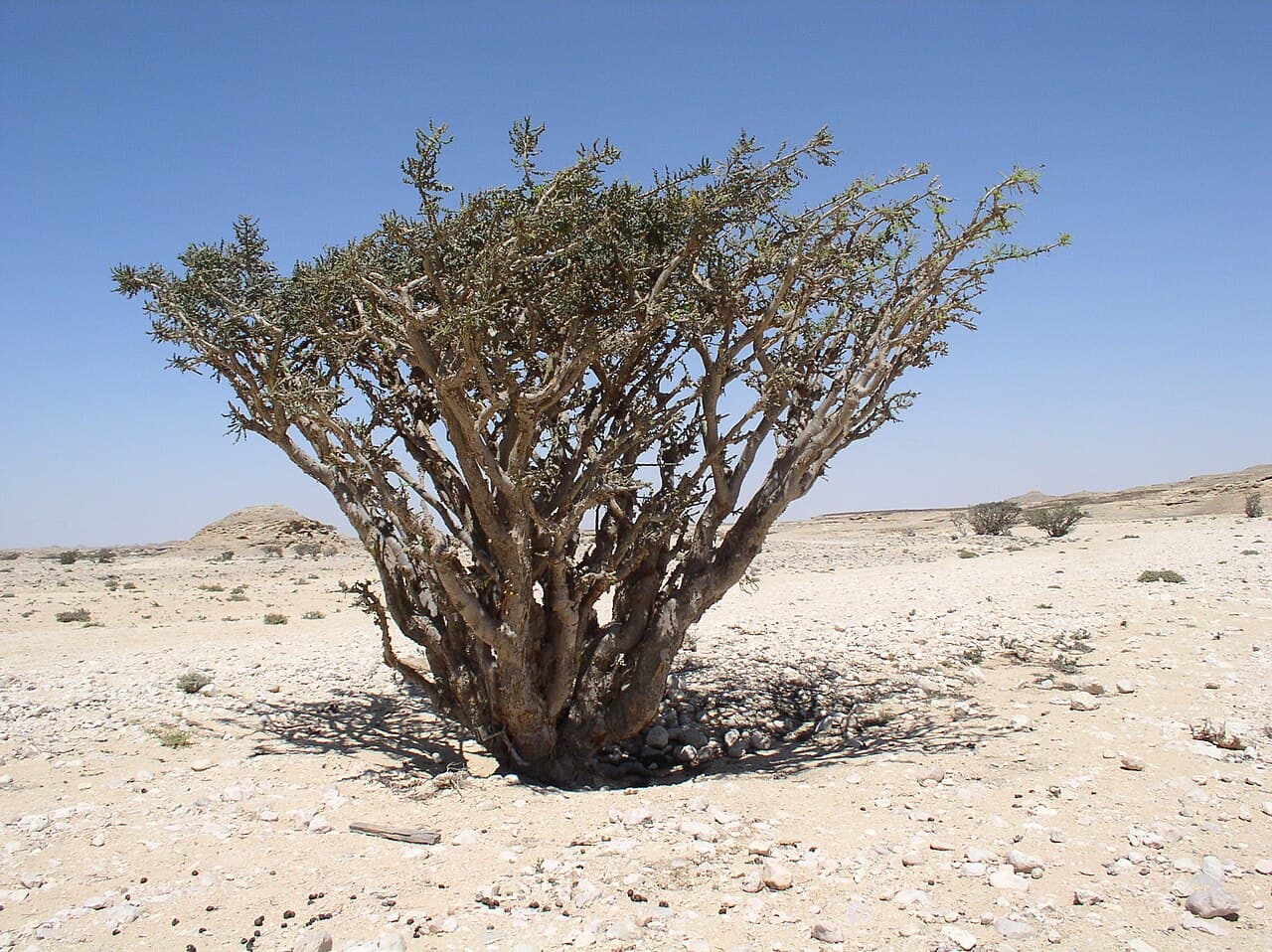
Let's start with the trees. They grow on limestone cliffs in Somaliland and Puntland, in Dhofar, in Yemen and Ethiopia, and the families who tap them have done so for generations. A tree can take about twelve cuts a year and stay healthy. Researchers have found trees carrying as many as 120. The ecologist who counted them, Anjanette DeCarlo of Save Frankincense, said her team was "absolutely in shock," and later, in one line: "What I don't want to see is that we love these trees to death." The men who make those cuts climb the cliffs without ropes or harnesses. One harvester told a reporter that every year, during the harvest, someone is seriously hurt or someone dies.
The resin comes down the mountain to the sorting houses. In Somaliland, the women who sort the tears were paid about a dollar a day, in warehouses without toilets or running water, by an exporter supplying a large American essential oil company. The harvesters went unpaid for years, then were paid in food. The allegations go further than wages. The two organizations that brought the evidence to US Customs, Corporate Accountability Lab and the Horn of Africa Charity Organisation, report that Customs found 5 indicators of forced labor: deception, withholding of wages, abusive working conditions, threats and intimidation, and physical violence. Their own 2024 report carries allegations of "sex trafficking, and rape or assault of hundreds of women and girls" by the exporter's people. Survivors made these allegations to investigators. I can't prove them. I can only tell you they exist, and that the company hired a law firm to look into them. The company's own investigation found that its supplier had not paid harvesters and sorters fairly or on time. It ended the contract in December 2023. In November 2024, US Customs began blocking the exporter's Frankincense at the border for indicators of forced labor.
Continue reading the full Dig.
Joining is free. It unlocks every full Library entry and brings you The Dig, one letter a month.
Ancient Tools. Modern Life.