
Lavender
The Long Exhale
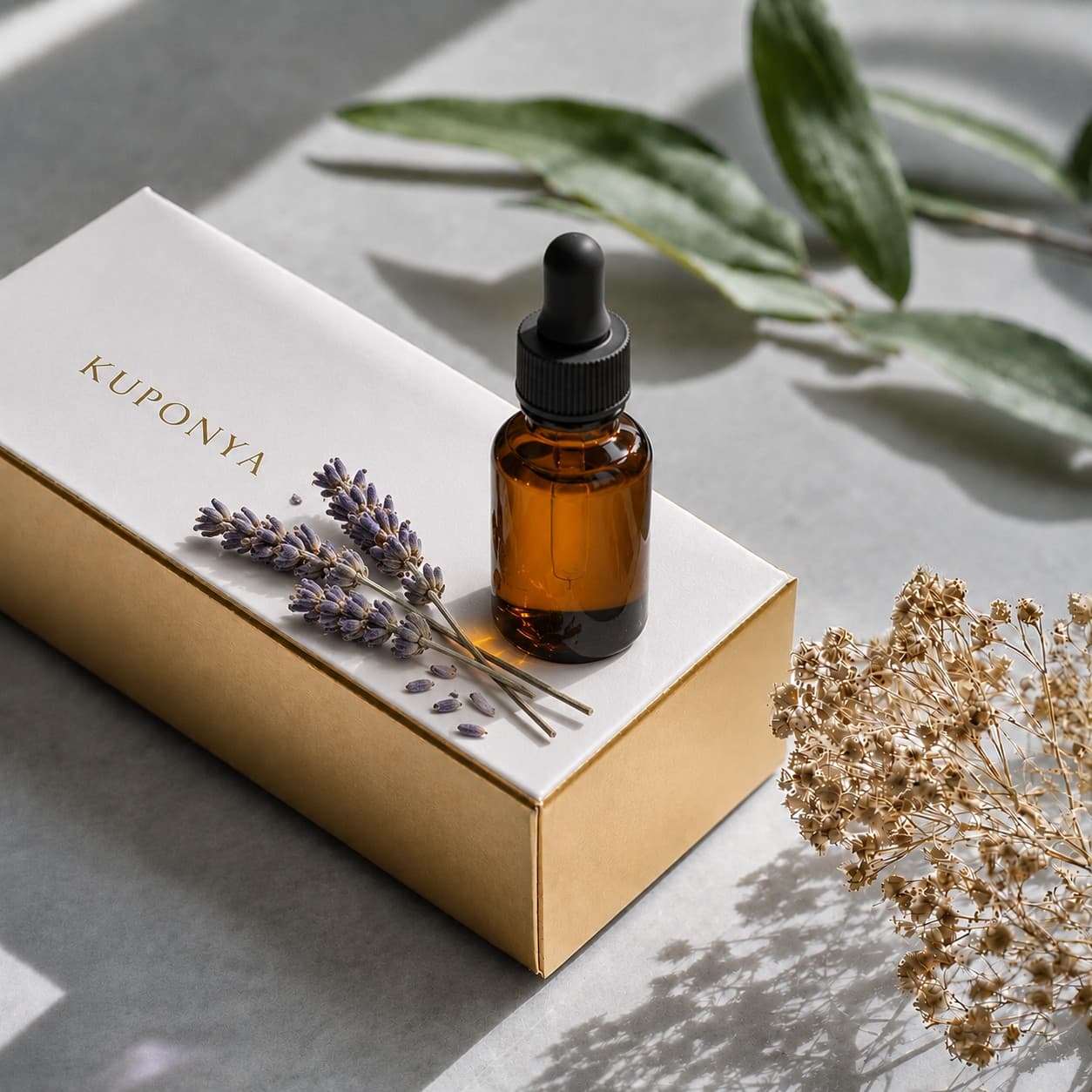
There are more than 40 species of Lavender. The genus Lavandula is found from the North Atlantic islands to India; its centers of diversity are the Canary Islands, North Africa, the Arabian Peninsula, and Northeast Africa. Kew’s list of countries where lavenders are native runs through Egypt, Eritrea, Ethiopia, Oman, Socotra, Somalia, Sudan, and Yemen before it reaches southern Europe. Lavender is as African and Arabian as it is European.
The oil in your bottle starts in Europe, and I’ll say it plainly: Lavandula angustifolia, true Lavender, is native to northeast Spain, France, and Italy, in the mountains between 600 and 1,200 meters. The Lavender of ancient medicine was a different plant, and the country that now leads the world in Lavender is Bulgaria, not France.
Quick reference
- Also known as
- True Lavender · fine Lavender · lavande fine (French) · ustukhuddus (Unani, for L. stoechas)
- Plant
- Lavandula angustifolia (older books: L. vera, L. officinalis), family Lamiaceae
- NOT the same as
- L. stoechas, with considerable camphor and cineole; lavandin (L. × intermedia), a hybrid whose cheaper oil is often used to counterfeit true Lavender; spike Lavender (L. latifolia); cotton Lavender, not a Lavender at all
- Range of the genus
- From the North Atlantic islands to India; centers of diversity in the Canary Islands, North Africa, Arabia, Northeast Africa
- Origin of the oil plant
- Northeast Spain, France, Italy; mountains, 600 to 1,200 m
- Key sources today
- Bulgaria (the leading producer) · France · China (Xinjiang, Ili Valley)
- Extraction
- Steam distillation of the flowering tops
- Main components
- Linalool and linalyl acetate (ISO 3515: linalool 20 to 45%, linalyl acetate 25 to 47%, by origin)
- Tradition
- Calm · rest · cleansing · the long exhale
- Safety
- Dilute for skin · oil left open to air oxidizes and can sensitize the skin · see Safety
- KUPONYA pairing
- Amethyst
Two ways to begin
The long exhale. 2 drops on a tissue by the pillow, or in the diffuser, 20 minutes before you intend to sleep. Not to knock you out. To stop the day from following you in.
The reset between rooms. The bottle in your hand, one slow breath in through the nose, before the next meeting, the next call, the next person. Lavender clears the last thing out so the next thing can start clean.
A note on safety: dilute Lavender for the skin, keep the bottle capped, and replace oil that has sat open; the safety section explains why.
What Lavender is really for
Everyone knows Lavender is for sleep. The strongest evidence says something else. That evidence is not about the bottle at all. It comes from a capsule, Silexan, an oral Lavender-oil preparation, and it is about anxiety, not sleep. In 2023, a meta-analysis (a study that pools earlier trials) combined 5 placebo-controlled trials and 1,213 patients and found Silexan significantly superior to placebo for anxiety after 10 weeks; all 5 trials were completed by the manufacturer, which is why the results should be read with care. Sleep improved too, but, as a separate analysis of the capsule found, almost exclusively through the anxiety coming down, not through sedation. The capsule is a licensed medicine in Germany, for adults; it is not the oil in your bottle.
The bottle has weaker evidence, but not none. A 2019 meta-analysis found, for inhalation, only an indication of a reasonable effect size, from studies it rated as low quality. A 2026 review says the certainty is low and Lavender aromatherapy may be associated with small-to-moderate improvements in sleep quality. A 2018 search found no evidence comparing the capsule with inhaled Lavender. And in one analysis of critically ill patients, rated low certainty by its own authors, a blend of Lavender with chamomile (Matricaria recutita) and neroli ranked above Lavender alone.
So here is what Lavender is really for. In the strongest studies, of the capsule, sleep improved without sedation. It takes the edge off, the running thoughts, the day that won’t end, and once the edge is off, rest comes on its own. You are not buying a sleeping pill. What you are reaching for is the long exhale before sleep.
What people turn to Lavender for
These are the practices people have leaned on for a long time. Take what fits, leave what doesn’t.
Body & skin
• Rest. On the pillow, in the diffuser, in a blend at night. The one I use most.
• Small burns. The story of René-Maurice Gattefossé, a French perfume chemist, and mine, below. First aid for any burn is cool running water for at least 5 minutes, and the American Burn Association says not to use butter, oils, or ointments; they trap heat.
Heart & mind
• The running mind. The thoughts that start when the light goes off. This is where the evidence actually sits: anxiety first, sleep after.
• The reset. Between one demand and the next, one breath from the bottle to clear the last thing out.
Spirit & ceremony
• Cleansing. Lavender has a place in purification work; the washing, its name is said to point to.
• Smoke. In Europe, the plant burned for clearing a space was Lavender, not white sage.
• Chakra. The crown and the brow, where the thinking happens: the diffuser running while I sit, and I let the head go quiet.
One name, many plants
The plants that share the name are easy enough to tell apart, and only one of them belongs in your bottle. That one is true Lavender, Lavandula angustifolia: one unbranched stalk ending in a short spike of flowers. L. stoechas, the “bunny ears” of the garden, carries colored flags at the top of its spike and an oil with considerable camphor and cineole, two sharp, medicinal-smelling compounds. Spike Lavender, L. latifolia, grows lower down, at 300 to 800 meters, compared with true Lavender’s 600 to 1,200. Lavandin is the sterile hybrid of true and spike Lavender, with far more oil per hectare, about 120 kilograms, compared with true Lavender's 40. That matters at the counter. In France itself there is far more land under lavandin than under true Lavender, 22,260 hectares against 8,394 in 2023, and lavandin's cheaper oil is often used to pass as the real thing. "Made in France" on a label tells you the country, not the plant. The Latin name tells you the plant: Lavandula angustifolia, and nothing else.
In the diffuser every night, on my pulse points before bed, and on the odd burn. What this oil does for me is on the other side.
Free sign-up unlocks the rest of the story.
Free sign-up unlocks the rest: safety, the crystal pairing, and how I use it every night.