
Amethyst
The Clear Head
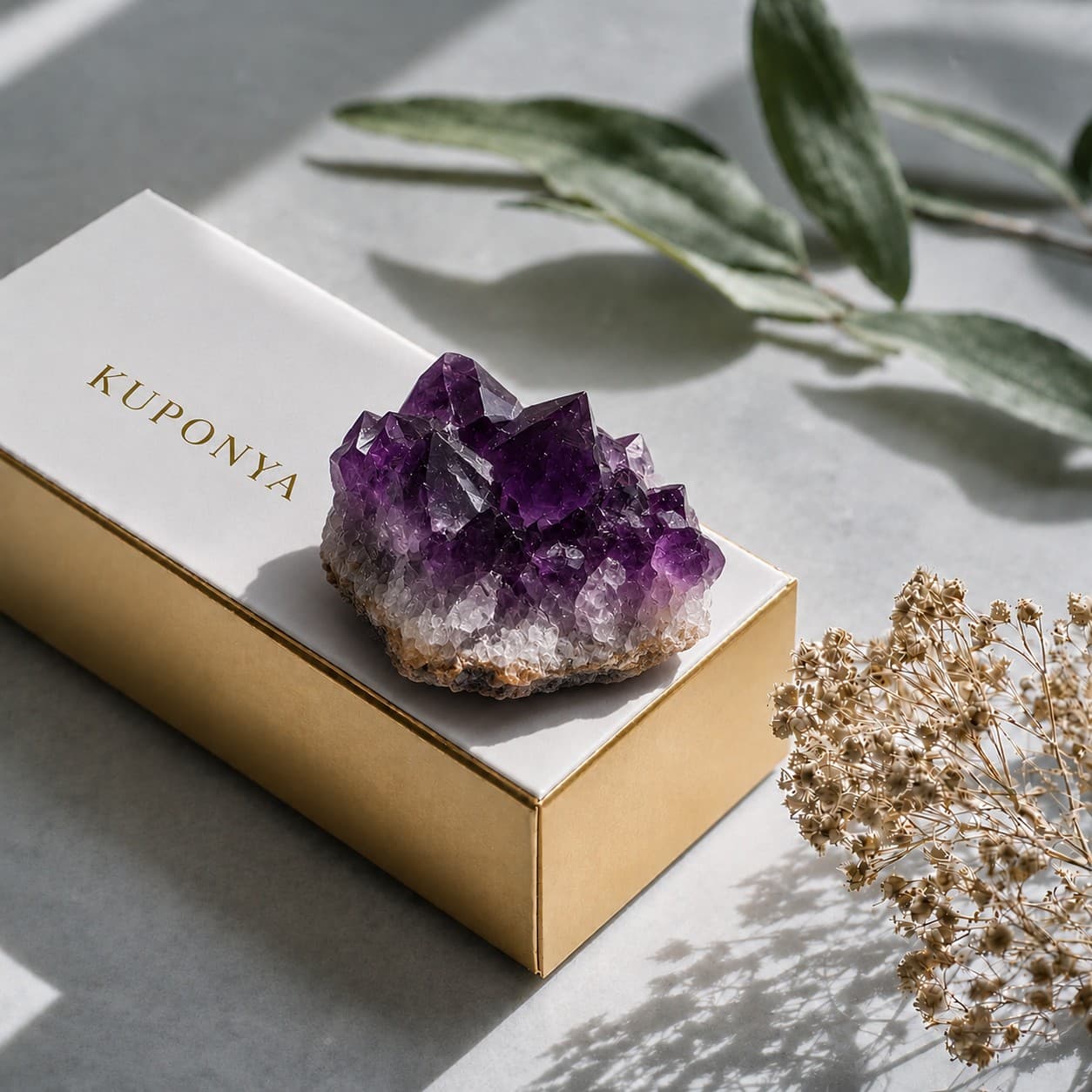
In Egypt's late Predynastic period, people along the Nile were already carving this purple stone, which the Middle Kingdom would call hesmen, into beads and amulets, small objects worn on the body. One early piece is a bull's head, carved from Amethyst and pierced at the back, from a grave at Matmar in Middle Egypt. Amethyst's story begins in Africa.
At the start of the Middle Kingdom, Egypt's kings began sending expeditions into the desert southeast of Aswan to dig it out; some of their inscriptions claim more than fifteen hundred men. They were not the only ones out there. In the same years, small groups of Nubians mined Amethyst for themselves, separate from the state and outside its oversight.
You probably know Amethyst as the stone of calm, of sleep, of a quieter mind. That reputation is real. But the name came last, from the Greeks, and the famous myth about how it turned purple goes back no further than a French poem of 1576, as far as anyone has shown.
Quick reference
- Also known as
- Purple quartz · hesmen (Egyptian) · amethystos (Greek, "not drunk")
- Mineral
- Quartz, colored purple by traces of iron and natural radiation · 7 on the Mohs scale of hardness
- Family
- Chevron (a trade name) · Ametrine · Vera Cruz · Brandberg · Cactus quartz
- Key sources
- Egypt (ancient) · Brazil · Uruguay · Zambia · India (historic)
- Tradition
- Calm · rest · a clear head · protection
- Care
- A soft brush and mild soap · keep out of long direct sun; the purple can fade
- Best known for
- Calm, sleep, a clear head, intuition
- KUPONYA pairing
- Lavender
Two ways to begin
The evening set-down. Before bed, hold your Amethyst and name the one thing from today you're done with. Then put the stone on your nightstand and leave it there.
The clear-head check. Before a decision, hold it and breathe once. Ask yourself: am I seeing this clearly, or am I still running hot?
A note on care: Amethyst is durable, and a soft brush with mild soap is the safest way to clean it, but keep it out of long, direct sun, which can fade the purple. Full care is below.
What it's really for
The Greeks gave this stone a name about wine, but the real gift is in the name itself: not drunk. Not carried away. Not by the noise, the meetings, or the thoughts that keep running after you've turned the light off.
Amethyst is the stone of the clear head. It isn't a sedative, and it doesn't pretend to be. It's the stone you reach for when you need to come down from a long day without collapsing into it, when you want to set things down and see clearly what's yours to carry and what isn't.
Three gifts, and they work together: calm (the coming down), rest (the letting go), and a clear head (what's left when the noise stops).
There are other stones in this Library for the end of the day. Selenite clears the space. Black Tourmaline and Obsidian hold the line around you. Amethyst works somewhere else: on the head itself. It's the stone for when the day has gone to your head, when you're still running on the meeting, the email, the argument, long after it's over.
What people turn to Amethyst for
Calm & rest
• The bedside stone. Under the pillow for restful sleep and dreams. Many people keep it by the bed as a cue to put the day down.
• The quieter mind. A calming stone to turn to when thoughts won't settle.
• Not drowning in it. For the water person, the one who flows with feeling, Amethyst is the stone that keeps you from drowning in your own emotions, or flooding other people with them.
A clear head
• Seeing straight. Traditionally worn against drunkenness, and linked to good decisions: common sense and insight, and the follow-through to act on them.
Protection & clearing
• The quiet shield. One of the most protective stones, one that clears negative energy from a space. Kept in the home for exactly that.
Intuition & the spiritual
• Meditation. One of the most spiritual stones, used for meditation and scrying (reading what you see in a reflective surface).
Where does this stone actually come from?
Egypt is where the record begins, and the people who mined it were Egyptians and Nubians, in a desert the Egyptian state tried to control and could not close. The Greeks named it, a Roman ranked it, a people called the Saladoid carried it through the Caribbean, and miners in Brazil still pay for it with their lungs. I call this history Desert Purple to honor where the stone's story begins and the people who mined it.
Free sign-up unlocks the rest of the story.
Free sign-up unlocks the rest: the deeper spiritual side, my Amethyst and Lavender ritual for the end of the day, and how I use it in my own life.